

What you’ll accomplish
You will distinguish pairing from unlock protection and choose the correct recovery action when a Screen is locked or paired to the wrong record.Pairing and unlock PINs are separate
- A pairing code is a temporary six-digit code used once to bind a Player device to a Screen record.
- A Screen unlock PIN is an optional four-to-six-digit secret used to exit locked fullscreen mode or release that device.
- The workspace emergency PIN is a six-to-ten-digit Owner/Admin recovery key that can unlock any Screen in that workspace.
Configure a Screen unlock PIN
- Open Screens → Devices.
- Open the Screen’s actions.
- Select Enable unlock PIN or Change unlock passcode.
- Enter four to six numeric digits.
- Save the passcode.
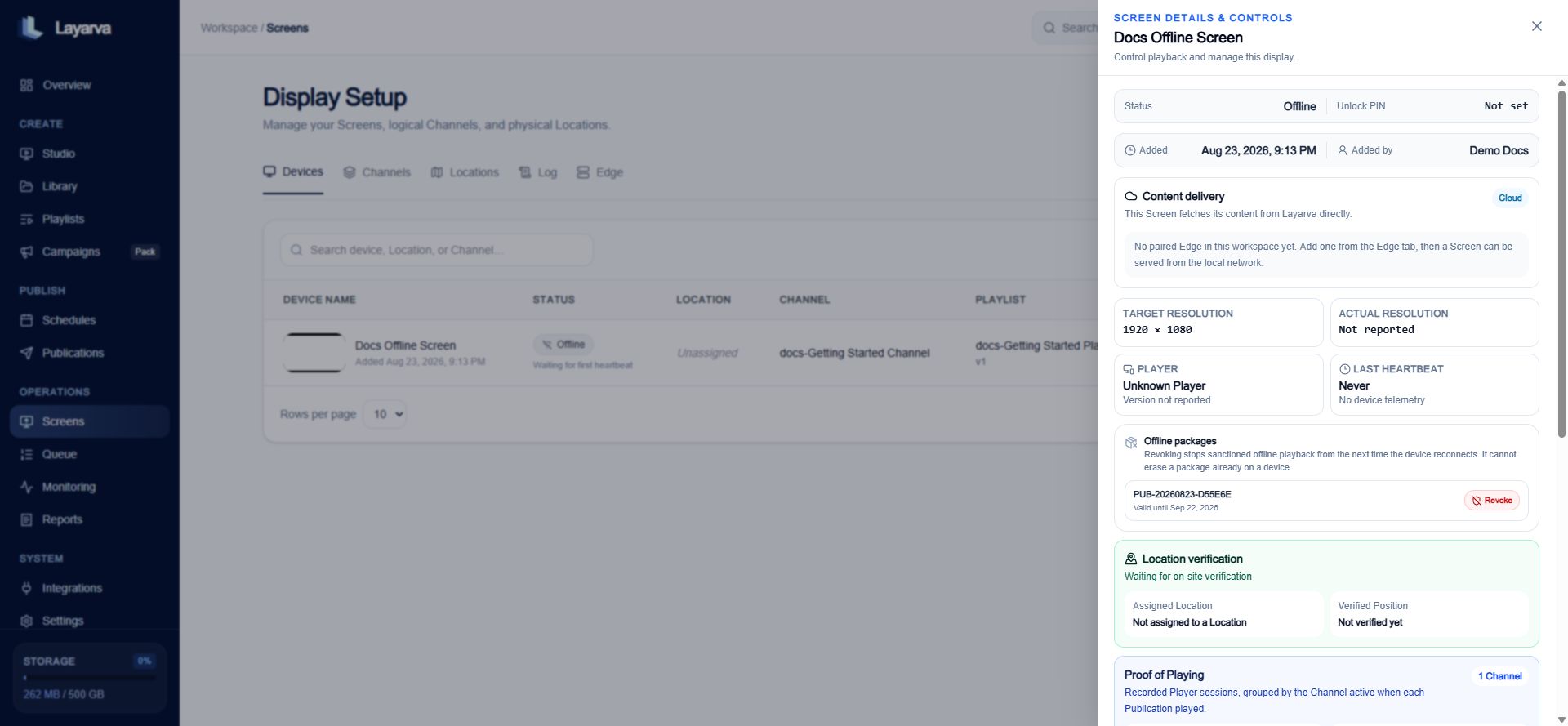
Screen actions separate pairing, location verification, playback control, PIN protection, output assignment, and archival.
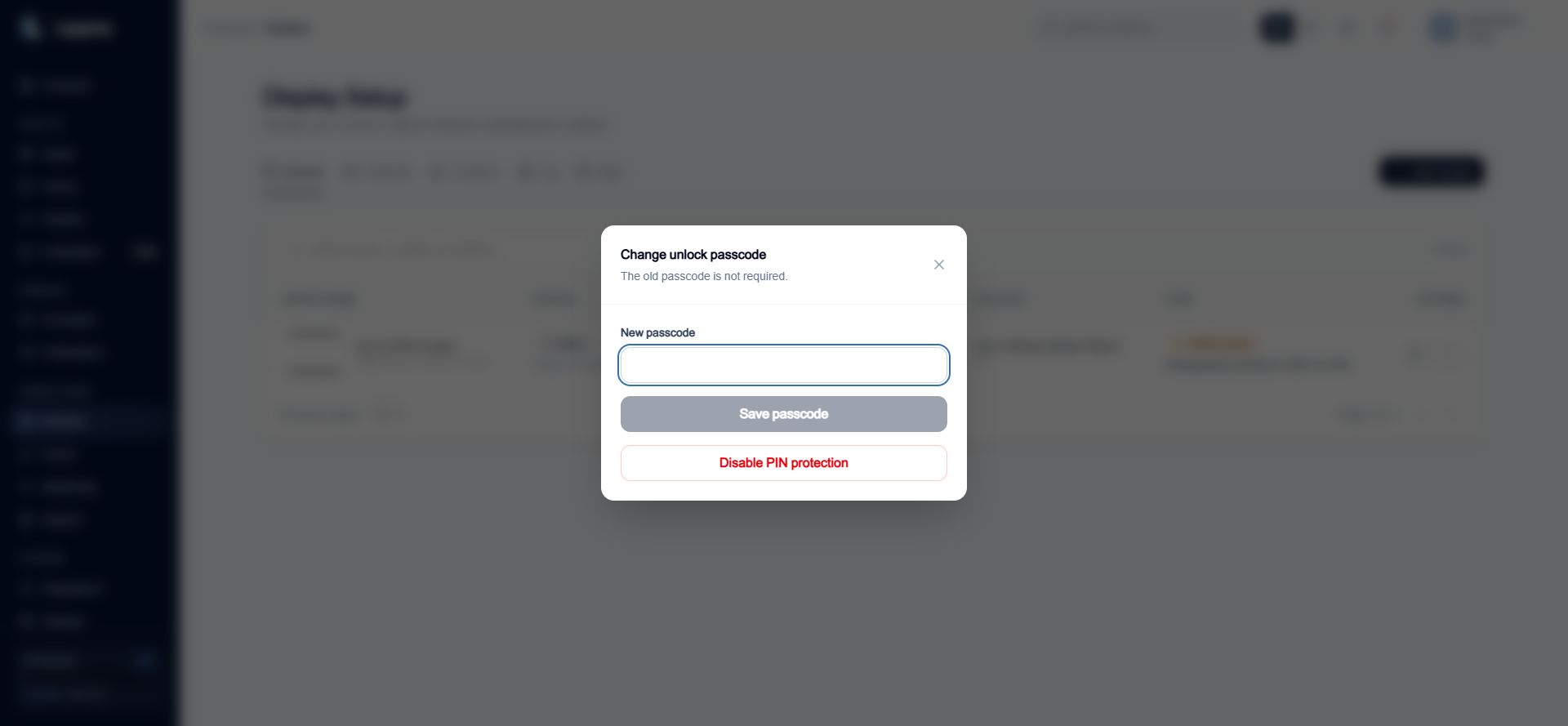
Changing a Screen PIN does not require the old value because the action already requires Screen management permission.
Set the emergency workspace PIN
- Open Settings → General.
- Find Emergency screen PIN.
- Enter six to ten numeric digits.
- Select Set PIN and store the recovery value securely.
Release from the device
Use Release this screen on the Player when the physical device is showing the wrong Screen and the operator cannot identify its dashboard record.- If the Screen has an unlock PIN, the Screen PIN or emergency workspace PIN is required.
- If no PIN is configured, explicit confirmation is sufficient.
- Success removes the device token, deletes the active pairing record, and sets playback to Unpaired.
- Releasing an unknown or already released token returns the same success response so Screen identities cannot be enumerated.
Revoke from the dashboard
Dashboard revocation requiresscreen.manage and is appropriate when the Admin already knows which Screen record to change. Archiving a Screen also revokes its pairing while preserving historical reporting.